Introducing Khnuma Simmonds, a 3rd generation Crucian woman whose pride for her heritage runs deep. This woman of many hats has made her life’s work focused on women empowerment and is passionate about her island home, the people and the community as a whole. In 2011, Simmonds opened a women’s boutique called My Girlfriend’s Closet (MGC) with a mission in mind to “empower women through fashion, faith and friendship.” In creating this welcoming environment for women of all backgrounds, Simmonds offered exclusive art and fashion items at her store. “I wanted MGC to have a high end feel while being this open, welcoming and comforting safe space for women,” said Simmonds.
Over time, the word that best described the vibe and feeling of MGC was “Girlfriendism,” the art of being a girlfriend whose empowerment serves other women in friendship, business and beyond. Simmonds recently launched a “Girlfriendism Campaign” in August 2020 which includes six different businesses under the Girlfriendism umbrella: fashion, fitness, wellness, business, travel and H.O.P.E. “Girlfriendism is the business that encompasses all of my many hats,” she said, “with each piece coming together to complete my vision of women empowerment.”
My Girlfriend’s Closet is the fashion piece and Sokh Caribbean Dance Fitness is the fitness arm. Simmonds leads weekly dance classes that focus more on what makes women beautiful and less on how many calories are burned. Through the rhythms of Kizomba (Anglolan music), reggae, soca, calypso and bachata, women are encouraged to get comfortable in their own skin. The wellness piece incorporates Simmonds mental health work and experience working with domestic violence survivors. Equipped with a B.A. in Communications and a M.A. in Education Guidance and Counseling, Simmonds creates wellness sessions centered on care, purpose and mindfulness. On the business side, the emphasis is on women interested in entrepreneurship where “women are coached in identifying their purpose and attaining their vision.”
The nonprofit piece of the Girlfriendism umbrella is H.O.P.E. which stands for Helping Ordinary People Every Day to be extraordinary through the arts and creative expression. The nonprofit supports those who suffer trauma as a result of domestic and sexual violence by using the arts to reduce stress.
Simmonds’ upcoming Girlfriendism Retreat will take place July 30 to Aug 1, culminating on National Girlfriend Day (August 1). Various workshops will cover all sectors of girlfriendism and will be led by local and visiting women professionals. “Highlighting local women-owned businesses while collaborating with women in business both locally and nationally is the epitome of Girlfriendism,” said Simmonds. Ultimately, the goal is to take Girlfriendism from a local concept to a global vision. It’s clear that Simmonds is well on her way to doing so and bringing those in the community along with her. To learn more, visit www.girlfriendism.com.
Article written by Anquanette Gaspard (agaspard@cruzanfoodie.com) for Coldwell Banker, St. Croix Realty
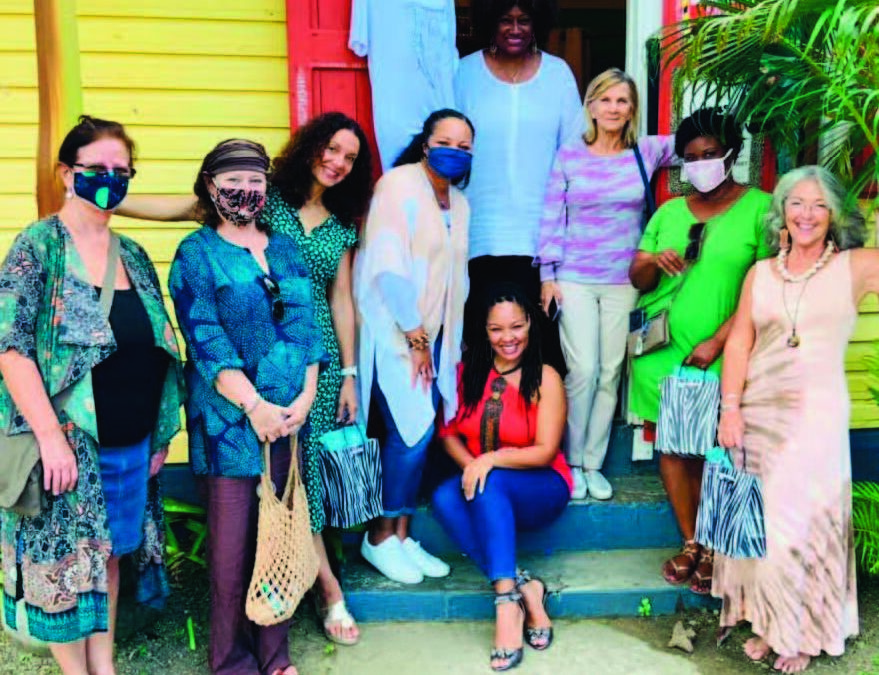
Photo courtesy of Khnuma Simmonds featuring a private sunset social held at Khnuma Simmonds’s My Girlfriend’s Closet Boutique where women sipped, shopped & shared.
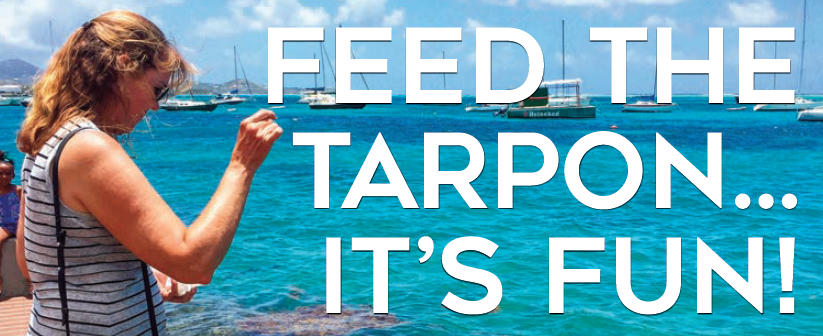
Any visit to St. Croix will always result with a visit or two to the Christiansted Boardwalk. With mesmerizing views of turquoise waters and clear blue skies, it’s no wonder this location is a favorite of visitors and locals alike. One view that surprises many visitors on their leisurely stroll along the boardwalk is the large schools of fish found swimming in the waters beside them. These large-eyed silver fish are called tarpon; they congregate along the boardwalk lying in wait for someone to throw them food scraps. You name it, they eat it: chicken wing bones, pizza crust, nachos, burger buns, French fries and so much more. Tarpons are best described as bottom feeder fish, hovering around docks, boardwalks and charter boats in hopes of catching unwanted leftovers.
When the food scraps are thrown into the water, these widemouthed game fish race through the waters at breakneck speeds to get first dibs at the food. Don’t be surprised when they jump out the water to catch the food before it even hits the water! Because of the spectacular show they put on for their viewers, this activity is a beloved pastime for many along the boardwalk.
Their pronounced dorsal fin slicing through the water’s surface lends to their intimidating size. Not to worry though as tarpons are not a danger to humans, feeding mostly on crabs, needlefish and other mid-water prey. Next time you’re on St. Croix and grab a meal along the Christiansted Boardwalk, be sure to toss the remaining scraps on your plate to the tarpon in the nearby waters below. They’ll be thankful for the snack and you get a free show in return!
Photo taken by and article written by Anquanette Gaspard (agaspard@cruzanfoodie.com) for Coldwell Banker, St. Croix Realty
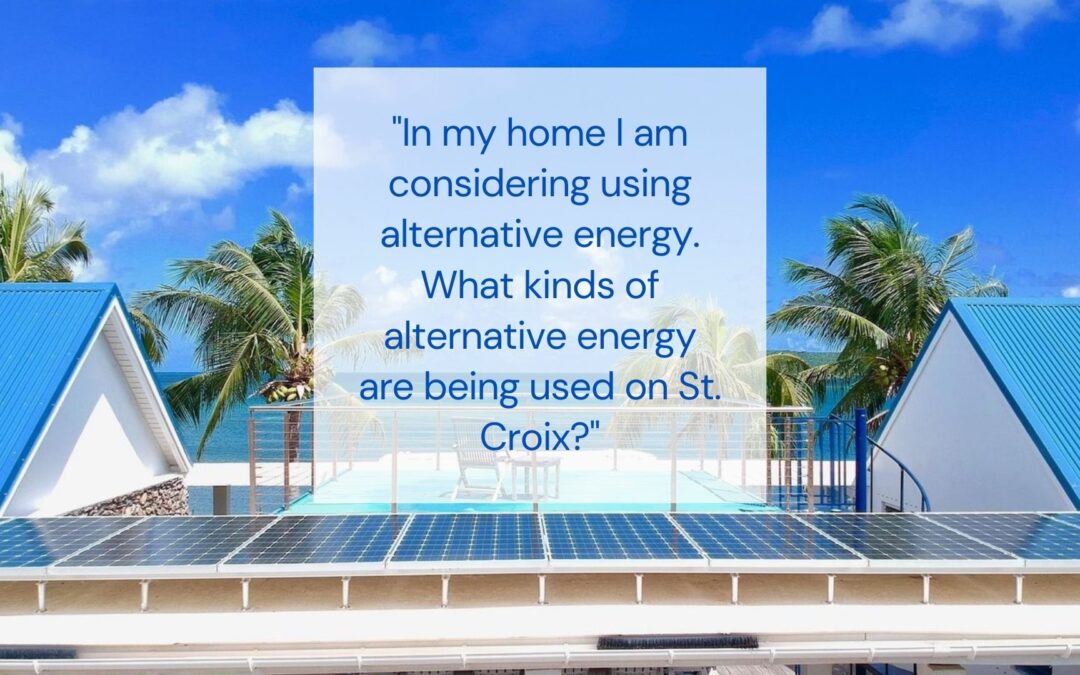
Question: “In my home I am considering using alternative energy. What kinds of alternative energy are being used on St. Croix?”
Christie’s Answer:
Many homes are using solar water heaters. Others use solar panels to power the entire home. Some homes have back up battery storage, which provides power when the sun is not shining. As you drive around the island, you will see some wind turbines, too. Propane is often used for stoves, and sometimes for clothes dryers, and infrequently, for refrigerators. Many homes have a clothes line to take advantage of solar and wind to dry clothes.
Here are 2 great web sites for information about alternative power and how to include these options into your home:
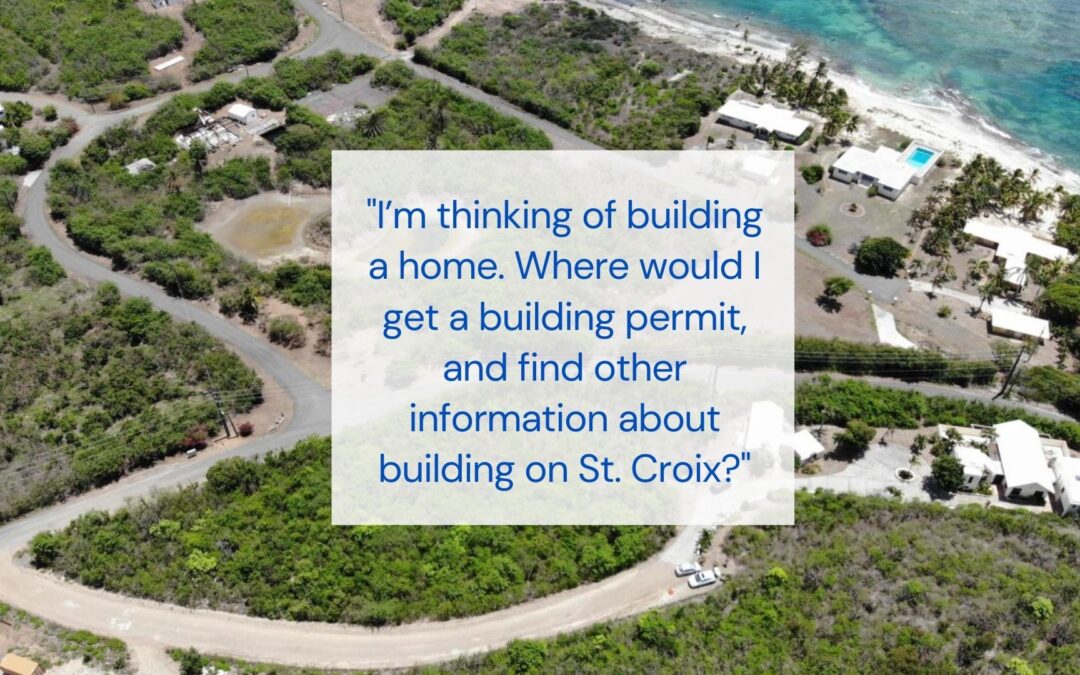
Question: “I’m thinking of building a home. Where would I get a building permit, and find other information about building on St. Croix?”
Chris’s Answer:
The USVI has a Department of Planning and Natural Resources (DPNR) whose primary responsibility is to enforce and regulate the local and national building codes and regulations. The web site below is a great place to get started with the permitting process. You will find permit applications and so much more.
The Department’s Vision statement speaks to their relationship with those of us who make the islands our home: “A strong foundation is vital to the construction of any home; the same is true for our community. The Division of Building Permits will ensure that we develop a strong foundation for the future of our Virgin Islands community as we move toward energy efficiency and sustainable development with a sense of honor, integrity and community.”
Maybe this is the year you start the journey of building your dream home on a tropical island.
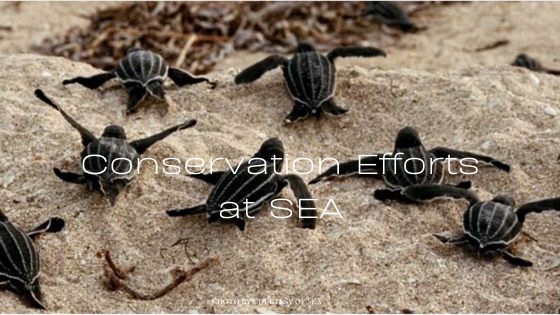
Promoting “the conservation of environmental resources” is a key element of St. Croix Environmental Association’s (SEA) mission. Did you know that the unique habitats and natural resources of the Southgate Coastal Reserve and other SEA sites help provide a variety of ecosystems that sustain diverse communities of plants, animals, native and migratory birds and marine life? Learn more about SEA’s conservation efforts:
Video of the the Leatherback Turtle hatchlings from GoToStCroix.com below. Read more about it here. SEA occasionally hosts turtle watch events for their members during the nesting and hatching season.
The Nature Conservancy’s (TNC) preserve on St. Croix, called Estate Little Princess, is home to the Virgin Islands Coral Innovation Hub, with a state-of-the-art coral laboratory and land-based nursery (opening in Spring 2021) according to the TNC. The Nature Conservancy was gifted the Estate in 1991 to be used in perpetuity for the furtherance of conservation, cultural and educational activities. The Estate has been listed on the National Register of Historic Places and will serve as an incubator for innovative approaches to coral conservation and disseminate today’s coral science and technology. To learn more about the TNC’s conservation and environmental research work in St Croix, explore these articles and websites:
Fact sheet: From fragile reefs to endangered sea turtles this Caribbean paradise needs protecting
About their work on the US Virgin Islands on TNC’s website
View photos of the state-of-the-art coral propagation facility and research laboratory on Facebook
Article about aerial remote sensing technologies used to develop first-ever high-resolution maps of coral reefs and other marine habitats throughout the Caribbean basin
Video below was recorded during a TNC expedition, when their coral science team witnessed spawning elkhorn corals that TNC had outplanted at Green Cay in St. Croix in 2012. This indicated that the outplants had grown successfully and were now reproducing naturally on their own. Read more about the work here.